

Living in Cedar City: Ideal for Families & Retirees
Cedar City Living, Family-friendly Cedar City, Retiree Lifestyle Cedar City, Cedar City Amenities, Cedar City Schools, Cedar City Community
Is Cedar City, UT a Good Place to Live for Families and Retirees?
Tucked into the red rock landscapes of southern Utah, Cedar City is steadily gaining attention as a welcoming, livable community. For families looking for a safe hometown and retirees seeking a slower pace without sacrificing culture or amenities, Cedar City often makes the shortlist. But what is everyday life really like here, and how well does the city serve both growing families and those enjoying their post‑career years?
Cedar City Living: Small-Town Feel with Big-Scenery Backdrop
Cedar City offers a lifestyle that blends small‑town charm with access to world‑class outdoor recreation. With a population hovering around 40,000, it is large enough to have essential services, shopping, and healthcare, yet small enough that traffic is light, faces become familiar, and local businesses remember your name. The city’s location along I‑15 makes regional travel straightforward, while still feeling distinctly removed from big‑city bustle.
The surrounding landscape is a major part of Cedar City living. Residents are within a short drive of Cedar Breaks National Monument, Brian Head Resort, and Zion and Bryce Canyon National Parks. That means four seasons of hiking, biking, skiing, and scenic drives. For both families and retirees, this easy access to nature encourages an active lifestyle and offers endless low‑cost ways to spend weekends and school breaks outdoors rather than indoors in front of screens or in crowded malls.
💡 Quality of Life Note: Many residents say the slower pace, clean air, and dark night skies are among the biggest reasons they stay in Cedar City long‑term.
Family-Friendly Cedar City: Safe Streets and Room to Grow
For families, Cedar City’s appeal starts with its reputation for safety and community involvement. Crime rates are typically lower than national averages, and neighborhoods tend to be quiet, with many streets where kids still ride bikes, play basketball in driveways, and walk to nearby parks. Parents often appreciate that the city feels manageable: you can cross town in minutes, making school drop‑off, activities, and errands less stressful than in larger metro areas.
Housing options also support family life. While prices have risen in recent years, Cedar City still tends to be more affordable than many western cities. You will find a mix of established neighborhoods with mature trees, newer subdivisions with playgrounds and walking paths, and townhomes or smaller single‑family homes for those just starting out. Yards are often big enough for swing sets, gardens, and backyard barbecues, which can be a real upgrade for families relocating from denser cities or expensive coastal markets.
Parks and Playgrounds: Cedar City maintains numerous parks, ball fields, and open spaces, giving kids room to run and families places to gather for picnics and birthday parties.
Youth Activities: From youth sports leagues to music programs and scouting groups, children have access to a wide range of extracurriculars without overwhelming schedules or long commutes.
Walkable Events: Seasonal parades, farmers markets, and festivals are often held in central areas, making it easy for families to participate together.
📌 Key Takeaway: If you value a childhood filled with outdoor play, community events, and familiar faces at school and around town, Cedar City delivers a truly family‑centric environment.
Retiree Lifestyle in Cedar City: Active, Cultural, and Manageable
Retirees are increasingly drawn to Cedar City for its combination of mild four‑season climate, relatively low cost of living, and strong sense of community. While winters bring snow, especially in nearby mountain areas, the city itself tends to have more moderate conditions than higher‑elevation ski towns, and summers are warm but generally less intense than some desert communities farther south. For many retirees, this balance allows for year‑round outdoor activity without extreme weather dominating daily life.
One of Cedar City’s standout perks for retirees is its cultural scene. Home to Southern Utah University (SUU), the city hosts the renowned Utah Shakespeare Festival, along with concerts, lectures, and art events throughout the year. Retirees often enjoy the convenience of world‑class theater and music within minutes of home, without the crowds or prices of a major urban center. Many also take advantage of continuing education opportunities at SUU, whether through formal classes or community programs that welcome older learners.
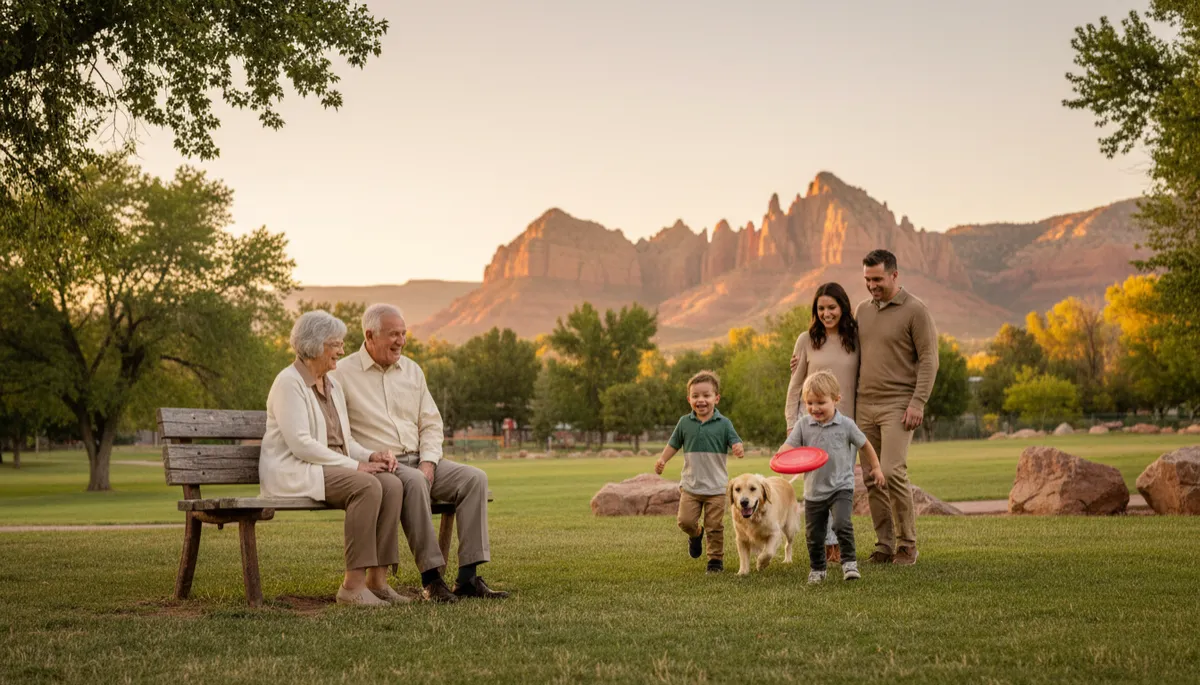
Multi-generational families often cite parks and views as daily quality-of-life highlights.
Healthcare access is an important consideration for anyone retiring to a smaller city. Cedar City has a regional hospital and a growing network of clinics and specialists. While some complex procedures may still require trips to larger cities such as St. George or Salt Lake City, many retirees find that routine care, diagnostics, and emergency services are conveniently available close to home. As the population grows, medical services have been expanding to meet demand, which is reassuring for those planning to age in place.
💡 Pro Tip for Retirees: Visit during different seasons to see how winter snow, spring winds, and summer warmth feel to you personally before making a permanent move.
Cedar City Amenities: Everyday Convenience with Local Character
While Cedar City is not a sprawling metro area, it offers a solid range of amenities that support comfortable daily living. Residents have access to grocery chains, big‑box retailers, pharmacies, and home improvement stores, plus a growing number of locally owned shops, coffee houses, and restaurants. Dining options include familiar national chains as well as independent eateries that highlight regional flavors and family recipes, giving the city a sense of place rather than a purely generic feel.
Recreation amenities are another strong point. The city maintains a recreation center with fitness facilities, pools, and programs for all ages, from youth swim lessons to senior exercise classes. Nearby Brian Head Resort adds skiing and snowboarding to the mix, while golf courses, walking trails, and bike paths round out the options. For families, this means plenty of ways to burn off energy without long drives. For retirees, it supports a healthy, active lifestyle that can be tailored to individual interests and abilities.
Shopping & Services: Essential shopping is close at hand, and many professional services—financial planners, attorneys, and home contractors—operate locally.
Arts & Culture: The Utah Shakespeare Festival, local galleries, and community theater groups provide regular cultural outings.
Outdoor Access: Trailheads, parks, and scenic drives begin just minutes from residential neighborhoods, minimizing travel time and maximizing enjoyment.
Cedar City Schools: Education at the Heart of the Community
For parents, school quality is often the deciding factor in any move. Cedar City is served by the Iron County School District, which operates elementary, middle, and high schools in and around the city. While individual experiences vary, many families appreciate the sense of connection between schools and the broader community. Teachers often live locally, parents are visible at events and volunteer opportunities, and school activities are frequently highlighted in local news and community conversations.
Class sizes tend to be more moderate than in many urban districts, which can support more personalized attention. Beyond core academics, students can participate in athletics, music, theater, and career‑technical programs that reflect the region’s needs and interests. High schoolers may also benefit from proximity to Southern Utah University, where concurrent enrollment and early college options can give motivated students a head start on higher education at a reduced cost.
📌 Parent Pointer: Before relocating, explore individual school websites, talk with current families, and, if possible, tour campuses to get a feel for teaching styles, extracurriculars, and school culture.
Cedar City Community: Friendly, Involved, and Growing
Perhaps the most defining feature of Cedar City is its sense of community. Residents frequently describe the city as friendly and welcoming, with a strong culture of volunteering and neighborly support. Community events—holiday parades, summer celebrations, local sports, and university happenings—draw people of all ages into shared spaces, creating regular opportunities to meet others and feel connected. For newcomers, this can make the transition to a new town smoother and less isolating than in larger, more anonymous cities.
Cedar City’s growth does bring change, and not everyone agrees on the pace or direction. More housing developments and new businesses mean increased traffic and a gradual shift from the smaller town many long‑time residents remember. Yet, for families and retirees arriving now, this growth also translates into more amenities, expanded healthcare, and a broader mix of neighbors from across the country. Community organizations, faith groups, and local clubs provide many ways to plug in, whether you are interested in hiking, service projects, book clubs, or grandparent playgroups.
💡 Community Insight: Many residents recommend attending a local festival or SUU event during a scouting trip; these gatherings offer a candid look at Cedar City’s personality and values.
Is Cedar City Right for Your Family or Retirement Plans?
No single city is perfect for everyone, but Cedar City checks many of the boxes families and retirees commonly prioritize: safety, a slower pace, access to nature, cultural opportunities, and a strong sense of community. Families find room for kids to grow, play, and learn in a supportive environment. Retirees discover an active yet relaxed lifestyle with enough amenities to feel comfortable, but not so much hustle that daily life becomes overwhelming or expensive.
Potential downsides to consider include limited ultra‑specialized healthcare options locally, fewer high‑end shopping and dining experiences than major cities, and the reality that winters do bring snow and colder temperatures. Some families may also wish for a broader range of niche extracurriculars or private school options. However, many residents feel these trade‑offs are more than balanced by the city’s affordability, outdoor access, and community spirit.
If you are considering Cedar City, plan at least one extended visit. Spend time in different neighborhoods, talk with locals in coffee shops and parks, attend a school event or performance at SUU, and take a drive to nearby national parks. Experiencing daily rhythms—morning traffic, evening quiet, weekend activities—will help you decide whether Cedar City’s blend of family‑friendliness, retiree comfort, and small‑city amenities aligns with the life you want to build.
For many, the answer to whether Cedar City is a good place to live is a confident yes. Families appreciate the space, safety, and schools; retirees enjoy the scenery, culture, and manageable pace. Together, they shape a community that feels both grounded and welcoming—a place where it is still possible to know your neighbors, watch the stars at night, and feel that your hometown truly supports the way you want to live.